You just spent good money sealing your crawl space, so the last thing you want to hear is that you need to buy something else. Fair. But here is the straight answer: in Northeast Georgia, most encapsulated crawl spaces still need a crawl space dehumidifier to keep moisture under control. Not every single one, but most. We will walk you through why a sealed space still pulls humidity, how dehumidifiers get sized, what they cost to run, and what happens if you skip it.
What Encapsulation Actually Does (and Doesn’t Do)
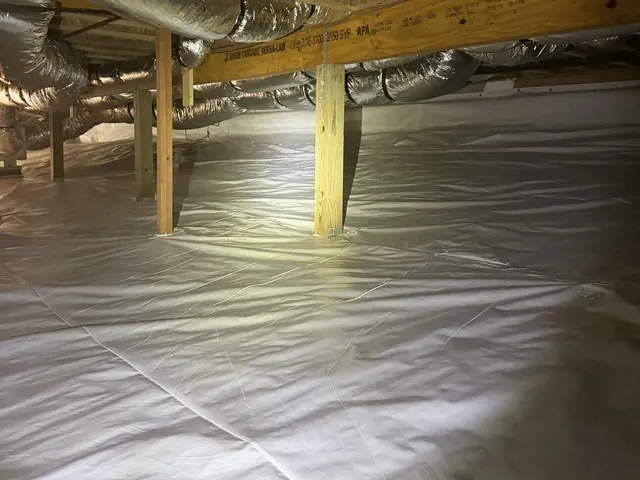
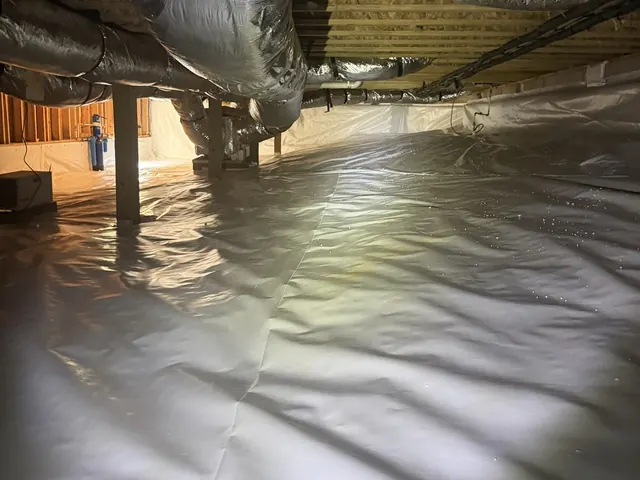
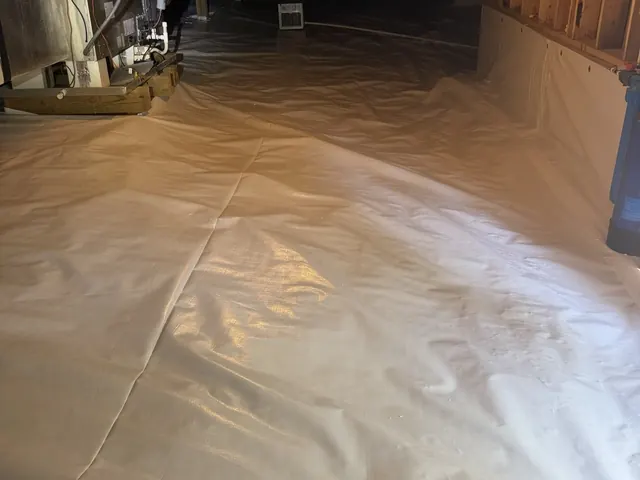
Encapsulation seals your crawl space off from the ground and outside air. A heavy vapor barrier goes down across the floor and up the walls, vents get sealed, and the space becomes part of your home’s conditioned envelope instead of a damp dirt cave under your feet. That stops the biggest moisture source, which is water vapor rising up out of the soil.
Here is the part people miss. Sealing the space does not remove the humidity that is already in there, and it does not stop every drop of moisture from finding its way in. Air still moves. Concrete and block walls hold moisture. And in Georgia, the air you trap during a humid summer install starts out wet to begin with. A vapor barrier is a wall against new moisture. It is not a machine that dries the air. That is the dehumidifier’s job.
Why a Sealed Crawl Space Still Needs Humidity Control
We work in a humid subtropical climate. Summers in Madison, Athens, and the rest of Northeast Georgia run warm and sticky for months, and that outdoor dew point does not magically stop at your foundation. Even a well-sealed crawl space sees moisture creep in through a few paths:
- Air exchange. No crawl space is hermetically sealed. Every time a door or access hatch opens, and through small gaps around plumbing and wiring, humid air sneaks in.
- Foundation walls. Concrete and cinder block are porous. They wick moisture from the surrounding soil and release it slowly into the space.
- Trapped humidity. The air sealed in during installation already carries moisture that has nowhere to go.
- Plumbing and ground temperature swings. Cool surfaces meeting warm humid air create condensation, the same way a cold glass sweats on a summer day.
The goal is to hold relative humidity below 60 percent, ideally in the 50 to 55 percent range. Below that line, mold cannot grow and wood stays dry. Above it, you are back to the same problems you paid to fix. A dehumidifier is what keeps you on the right side of that line year-round. Pair it with a solid vapor barrier and proper encapsulation, and you have a system that actually stays dry.
Sizing a Crawl Space Dehumidifier
Bigger is not automatically better, and the cheap unit from a big-box store usually is not the right tool. Crawl space dehumidifiers are different from the portable ones you set in a basement. They are built to run in a low, tight, dirty space and to pull a specific amount of water per day, rated in pints over 24 hours.
Sizing comes down to a few things:
- Square footage of the crawl space.
- How wet the space runs based on soil, drainage, and existing moisture.
- Ceiling height and layout, since cramped or chopped-up spaces affect airflow.
- Whether drainage and a sump are already handling standing water, which a dehumidifier is not meant to replace.
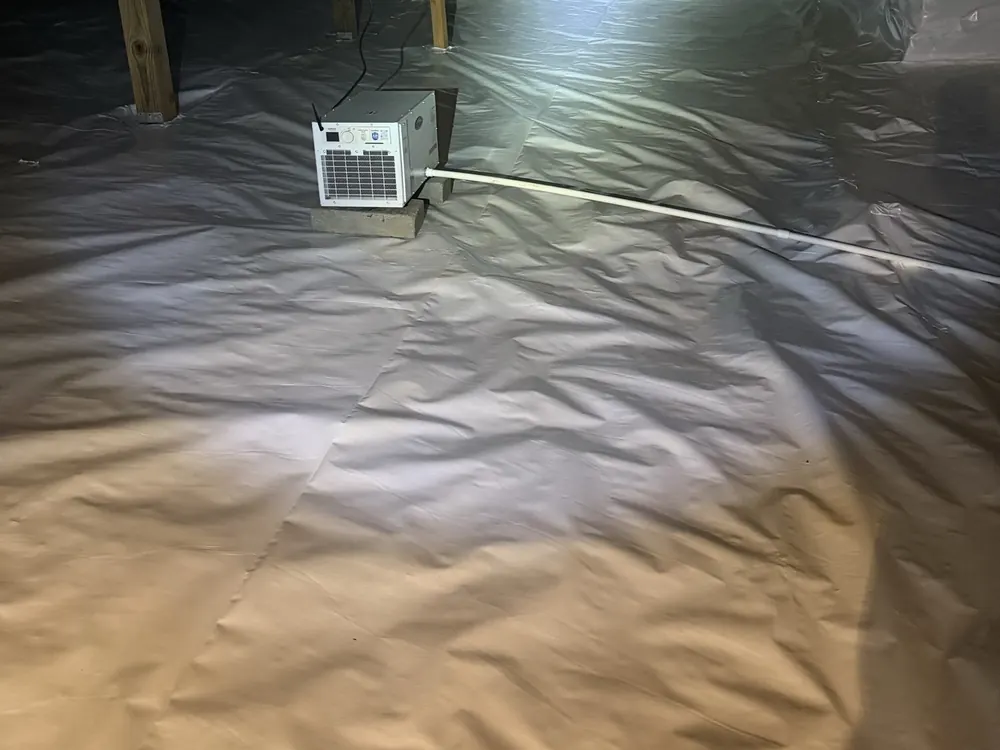
A unit that is too small runs constantly and never catches up. One that is oversized short-cycles and wastes energy. We size the unit to your actual space during the inspection, not off a guess. That is also where we set up the condensate drain so the water it pulls goes somewhere safe instead of pooling back on your barrier.
Energy Cost: What It Adds to Your Bill
This is the question we get most, and we will give it to you straight. A modern crawl space dehumidifier does not run wide open all day. Once the space is sealed and the air is dry, the unit cycles on only enough to hold the humidity target. What that costs each month depends on the unit, your climate, how leaky the space is, and your electric rate.
Worth knowing: a dry crawl space actually helps your HVAC. Damp air is harder to cool, so your air conditioner works less when the space underneath is controlled. Some of that dehumidifier cost gets offset by an easier load on your system upstairs. It is not free, but it is far from the budget-breaker people fear.
Maintenance: What Owning One Looks Like
Crawl space dehumidifiers are low-maintenance, not no-maintenance. The two things that matter:
- Filter. Check and clean or replace the air filter a couple times a year. A clogged filter kills efficiency fast.
- Condensate drain. Make sure the line stays clear so water keeps draining out instead of backing up.
Most quality units have a digital humidity readout, and some can be monitored remotely so you know it is doing its job without crawling under the house yourself. The unit carries our 5-year warranty, and we cover the install too, so if something is not running right, call us.
What Happens If You Skip It
Plenty of homeowners encapsulate and stop there to save money. Sometimes it works. Often it does not, and here is what that looks like when it goes wrong. Without active humidity control, a sealed space can actually trap moisture and let relative humidity climb. That gives you:
- Mold and mildew on joists, subfloor, and the underside of your home.
- Wood rot and weakened framing over time.
- Musty smells drifting up into the living space, since air from the crawl space rises into the rooms above it.
- A higher risk of pests that love damp, dark wood.
That is the irony. Skipping the dehumidifier to save money can undo the encapsulation. When that happens, the fix costs more than the dehumidifier would have.
Our Honest Take: Most Homes Yes, Some No
We are not going to tell every customer they need a dehumidifier just to pad the invoice. That is not how we work. Some crawl spaces, with excellent drainage, low water tables, and tight sealing, hold humidity fine on the vapor barrier alone. Those exist. But in this climate, they are the exception, not the rule.
The only way to know which camp your home falls in is to measure it. During a dehumidification inspection we check the actual moisture levels in your space, look at drainage and soil, and tell you the truth: you need one, or you do not. No pressure, no upsell on something you will not benefit from.
Frequently Asked Questions
Can I use a regular portable dehumidifier in my crawl space?
You can, but we do not recommend it. Portable units are not built for the low clearance, dust, and continuous duty of a crawl space, and they usually need you to empty a tank by hand. A dedicated crawl space unit drains automatically and is built to last in that environment.
How long does a crawl space dehumidifier last?
A quality unit, properly sized and maintained, typically runs many years of service. Keeping the filter clean and the drain clear is what gets you the long end of that range.
Will the dehumidifier run all the time?
No. Once your space is sealed and dried out, it cycles on and off to hold your humidity target, similar to how your thermostat cycles your AC. It is not running full blast around the clock.
Do you install dehumidifiers in Athens and the surrounding area?
Yes. We are based in Madison and serve Athens and all of Northeast Georgia. You can see more about our coverage on our Athens service area page.
If you have already encapsulated, or you are planning to, the smart move is to get the moisture levels measured before you decide. Crawl Space Doctors is family-owned and owner-operated, and our inspections are free. We will give you a straight answer on whether you need a dehumidifier and a clear price after we see your space. Call us at 706-608-7179 to schedule your free inspection.