It is a fair question. You are looking at a big project, and the salesman promised it will fix your musty crawl space for good. So you want to know: does crawl space encapsulation actually work in Georgia’s humidity? The short answer is yes, when it is done right. The longer answer is worth your time, because plenty of half-finished encapsulation jobs in Northeast Georgia do not work, and the reason they fail is predictable.
Here at Crawl Space Doctors, we seal crawl spaces across Athens, Madison, Gainesville, Augusta, and the surrounding Piedmont. Our climate is humid subtropical, which means hot, wet summers and red clay that holds water like a sponge. That is exactly the environment encapsulation is built for. Let us walk through why it works, what working looks like, and where it can fall short.
Why Encapsulation Works in a Humid Climate
A vented crawl space in Georgia is a humidity trap. Warm outside air carries a lot of moisture. When that air drifts through your foundation vents and hits the cooler surfaces under your house, the moisture condenses. Day after day, summer after summer, that wet air feeds mold, rots framing, and rusts ductwork. The old advice to vent a crawl space was written for dry northern climates. It backfires here.
Encapsulation works by cutting off every path moisture uses to get in. A proper job does three things together, and all three matter:
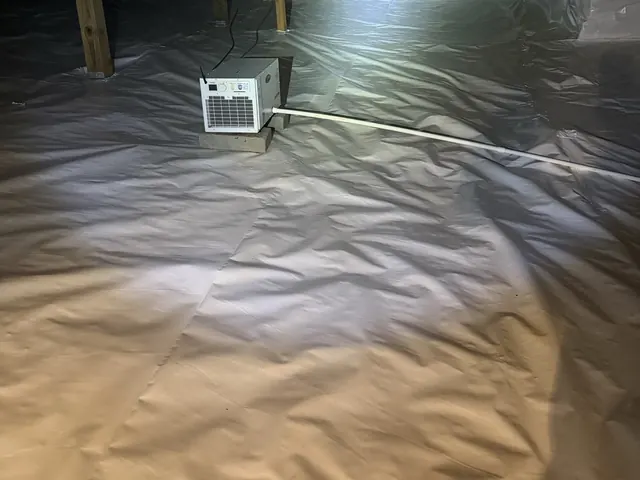
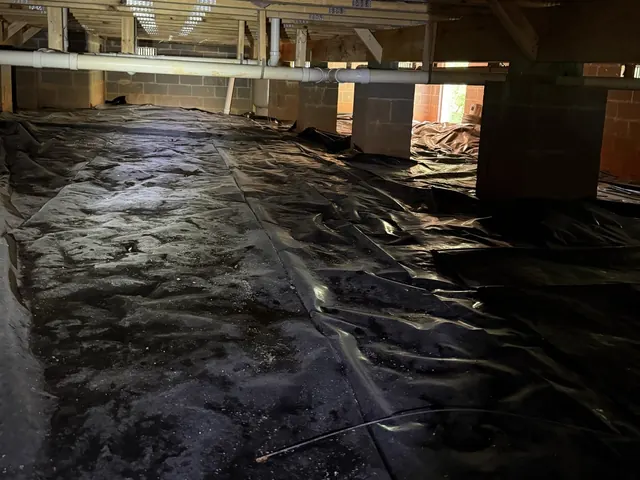
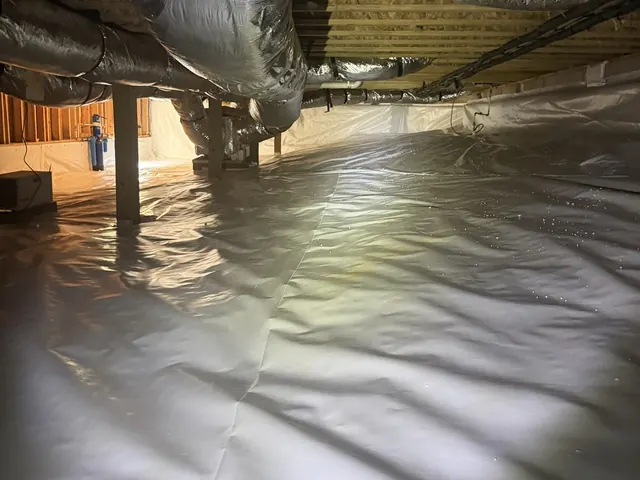
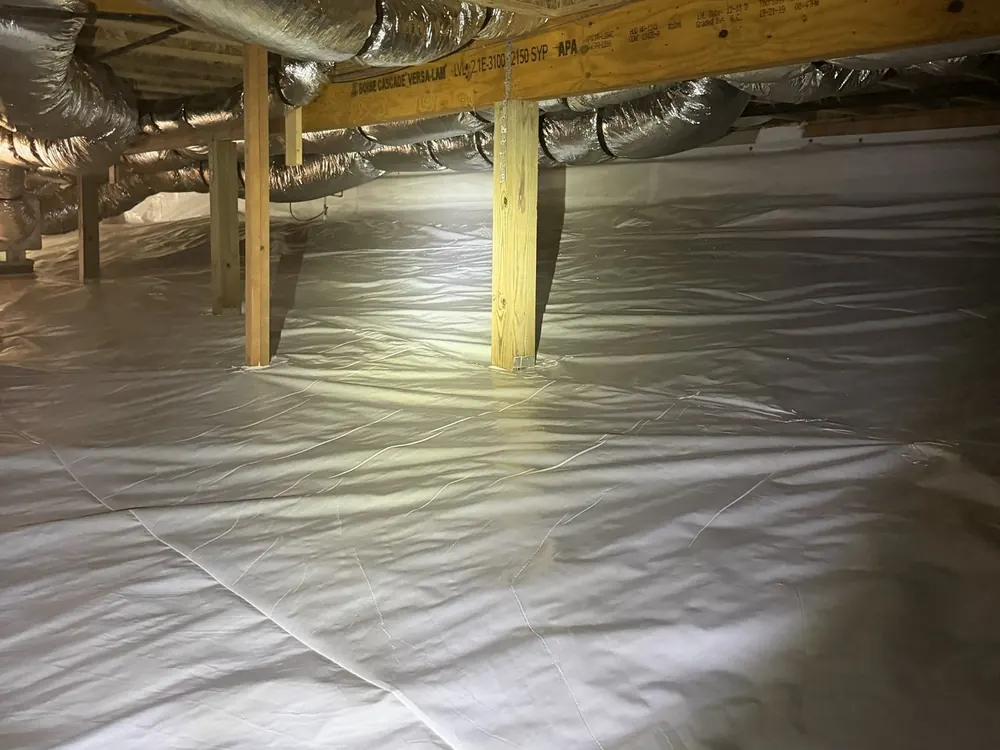
- A sealed vapor barrier. A heavy-duty liner covers the dirt floor and runs up the foundation walls, sealed at the seams and edges. The red clay under your home is constantly releasing ground moisture. The barrier stops it cold. This is the foundation of the whole system, which is why our vapor barrier service uses heavy-duty material, not the flimsy plastic you find at a hardware store.
- Sealed vents and openings. Those foundation vents that let humid summer air pour in get closed off. So do gaps around plumbing, the access door, and rim joists. If the vents stay open, you are fighting the outside air the whole time, and you will lose.
- A dehumidifier sized for the space. Sealing keeps new moisture out, but a dehumidifier pulls the air down to a stable, dry level and holds it there. This is the piece budget jobs skip, and it is the difference between a crawl space that smells fine and one that stays genuinely dry. Our crawl space dehumidification is matched to the square footage and moisture load of your home.
Seal the ground, seal the air, then condition what is left. Do all three and the physics works in your favor instead of against you. Skip one and you have a weak link. You can see how the full system fits together on our crawl space encapsulation page.
What ‘Working’ Actually Looks Like
Working is not a vague promise. It is measurable. Here is what you should expect after a proper encapsulation in our climate:
- Lower indoor humidity. A sealed, dehumidified crawl space typically holds relative humidity in the 50 percent range or below. Since air from the crawl space rises into the rooms above it, you feel the difference upstairs too. The house holds temperature better and the AC does not work as hard.
- The musty smell goes away. That damp, earthy odor is the smell of moisture and mold byproducts. Cut the moisture and the smell has nothing to feed on. Many homeowners report it fading once the space is dry.
- Rot and mold stop spreading. Wood needs moisture to rot, and mold needs moisture to grow. Drop the humidity below the threshold they need and both processes stall out. Existing damage does not reverse, but it stops getting worse.
- A clean, usable space. A bright, sealed crawl space you can actually enter without crawling through mud. That matters when a plumber or HVAC tech needs to get under there.
Realistic Expectations
Encapsulation is a moisture-control system, not a magic wand. A few honest points so you know what you are buying.
It does not undo existing damage. If a floor joist is already rotted or a beam is sagging, encapsulation stops the cause but does not repair the wood. Structural repairs are a separate fix, and a good inspection will tell you whether you need them before you seal.
It is not instant in every case. Humidity readings drop fast, but if the space had heavy mold growth, that may need to be addressed before or alongside the sealing. And a dehumidifier needs power and the occasional drain check to keep doing its job. This is a system that performs for years. Every install carries our 5-year warranty: we cover the unit and the install, and every job carries our 100% satisfaction guarantee.
When Sealing Alone Is Not Enough
Sometimes a barrier and sealed vents will not get you all the way there on their own. These are the cases we watch for during an inspection:
- Standing water or a high water table. If groundwater pools under the home after every rain, no liner will hold against it. That situation needs drainage or a sump pump first, then encapsulation on top.
- Active plumbing or grading leaks. A leaking supply line or water draining toward the foundation will overwhelm any system. The source gets fixed first.
- No dehumidifier. This is the most common reason a ‘sealed’ crawl space still feels damp. A barrier without conditioned air in a Georgia summer is a half-measure. The dehumidifier is not optional here.
This is exactly why we start every job with a free inspection. We check the moisture levels, the grading, the water table, and the condition of the wood before we quote anything. That is how you avoid paying for a partial fix that leaves you with the same musty smell next August.
Frequently Asked Questions
How long does crawl space encapsulation last?
A quality vapor barrier is built to last for decades. The dehumidifier is the component with moving parts, so it needs periodic checks, but the sealed system itself is a long-term fix. Every install carries our 5-year warranty: we cover the unit and the install, and every job carries our 100% satisfaction guarantee.
Will encapsulation lower my energy bills?
Often, yes. A dry, sealed crawl space helps your home hold temperature, so your AC and heat do not cycle as hard. Most Georgia homeowners are surprised how much more comfortable the floors feel year-round, and many see lower bills.
Do I still need a dehumidifier if I seal the vents?
In our humid climate, yes. Sealing keeps new moisture out, but ground moisture and trapped air still need to be conditioned. Skipping the dehumidifier is the number one reason a sealed crawl space stays damp. We size the unit to your specific space.
How much does encapsulation cost in Georgia?
Cost depends on the size of the crawl space, the condition of the wood, and whether drainage is needed. The free inspection is where the number comes from, and it comes in writing.
Get a Straight Answer for Your Home
The only way to know whether encapsulation will work for your crawl space is to have someone look at it. We are a family-owned, owner-operated team based in Madison, GA, serving Athens and Northeast Georgia. Schedule a free inspection, and we will tell you exactly what your crawl space needs and what it will cost. Call Crawl Space Doctors at 706-608-7179.