
Vapor Barriers & Crawl Space Insulation in Athens, Gainesville & Augusta, GA
Your insulation belongs in the floor.
When batts are lying on the dirt, the plastic is usually torn too. We replace both, properly, and photograph it so you can see.
Wet batts. Torn plastic. Red clay.
Three frames from our own inspections. If your crawl space looks like this, the barrier and the insulation have both stopped doing their jobs.
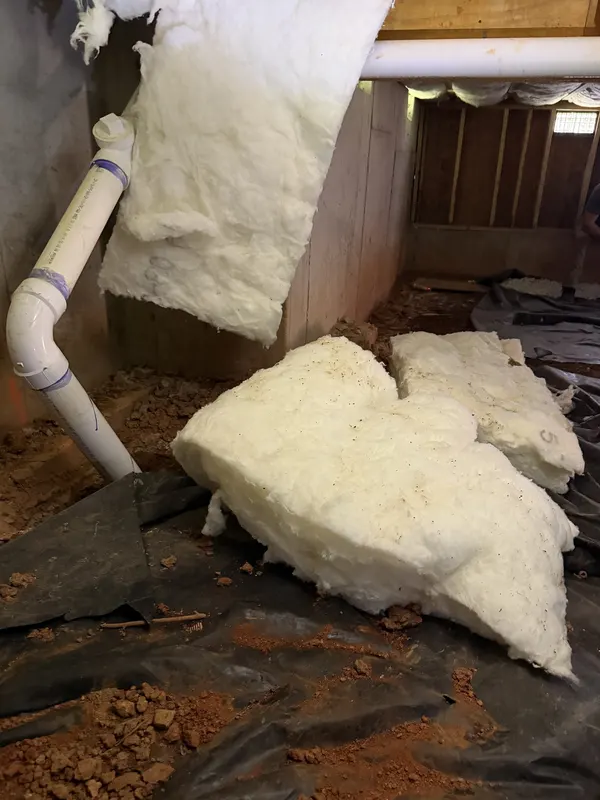
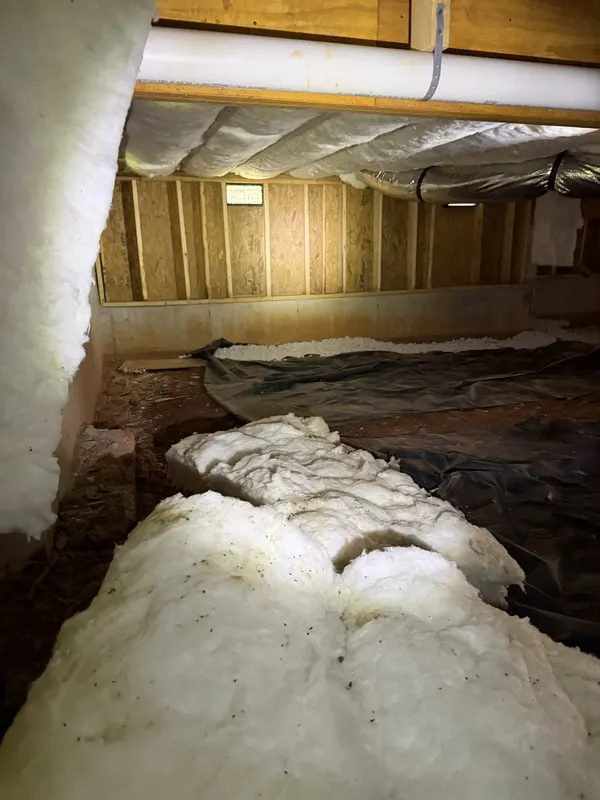
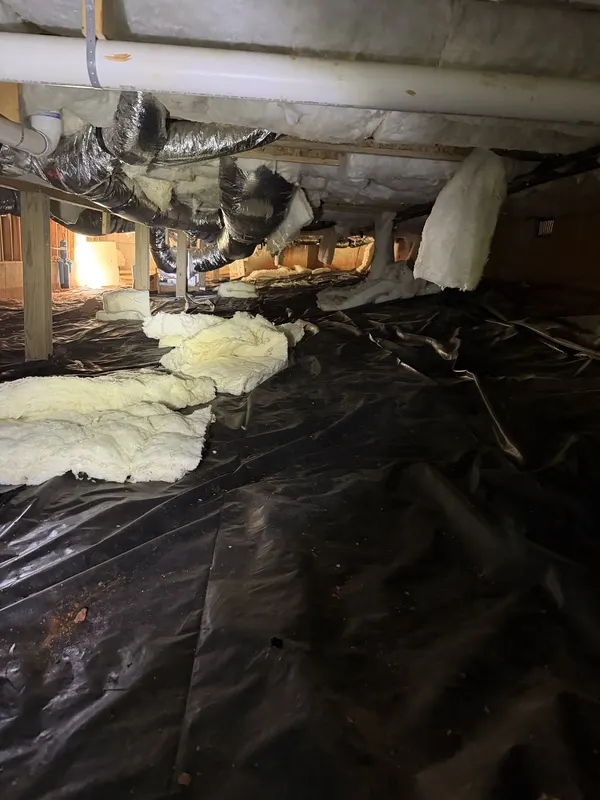
A new barrier may be all it takes.
Not every crawl space needs to be sealed. This is the line we draw, and it comes from the readings, not a sales sheet.
Barrier + insulation
- We install
- A heavy-duty liner over the dirt, fastened down and taped, and insulation put back where it belongs.
- Right for you if
- No standing water after rain, wood that reads dry, and old plastic that is simply worn out.
- Left as is
- Your vents. The space still breathes outside air.
Encapsulation
- We install
- The liner up the walls and piers too, sealed vents, a sealed door, and a dehumidifier sized to the space.
- Right for you if
- Wet readings in the wood, damp air most of the summer, a musty smell, or mold on the framing.
- Before we start
- Water problems get drainage first.
We read the wood and the air on the free inspection and quote the smaller job when it will do. See encapsulation
Floor or walls? It depends on the vents.
Insulation goes where the cold edge of the space is. That changes once a crawl space is sealed.

Vented space
Insulation fits between the floor joists, held up for good so it cannot sag back onto the dirt.
Sealed space
For an encapsulated crawl space in our climate, insulating the walls is usually the better approach. We pick by how your space is built.
Out with the old, in with the right
Most of this job is removal. The order keeps the new material clean and dry.
- 01
The Full Checkup
We photograph the old plastic and every fallen batt, and read the wood and the air to see if a barrier will be enough.
- 02
The Straight Diagnosis
You get the scope and the photos in writing, barrier only or barrier plus insulation.
- 03
The Dry-Out
Old plastic and wet insulation come out. The new liner goes down, fastened and taped, and the insulation goes back where it belongs.
- 04
The Aftercare
Before and after photos of your crawl space, the paperwork, and a phone that we answer ourselves.
“Michael and Dustin came out on Saturday 9-5-26 and performed crawlspace work and installing a Dehumidifier. Both owners were on site and complete the work in the same day.”
“No over selling, just pricing what you actually need for your individual crawlspace needs.”
“After interviewing multiple vendors I selected Crawlspace Doctors. Their pricing was very reasonable, and the results are excellent.”
Barrier and insulation questions
Most of the plastic we find is thin sheeting, torn, and loose on the dirt, which does very little. A real vapor barrier is a heavy material, fastened down and taped at the seams. It is the difference between a token gesture and an actual moisture block.
Fiberglass batts soak up damp crawl space air, get heavy, and drop out of the joists. Putting the same batts back up without fixing the moisture just restarts the clock, so we look at the barrier and the air at the same time.
It depends on whether the space is vented or sealed. For a sealed, encapsulated crawl space in our climate, insulating the walls is usually the better approach; for some vented spaces, floor insulation still has a role.
Usually, yes. Insulation that is back in place keeps winter cold out of the floor, and a barrier keeps damp ground air from rising into the house. Most homeowners feel it first as warmer floors.
Wood reading wet, or a musty smell upstairs? A barrier will not fix that alone.
EncapsulationMold remediationIs your barrier doing its job? We will look.
Free photos of your plastic and your insulation, and a straight answer on whether a barrier is enough.
Prefer to talk?706-608-7179