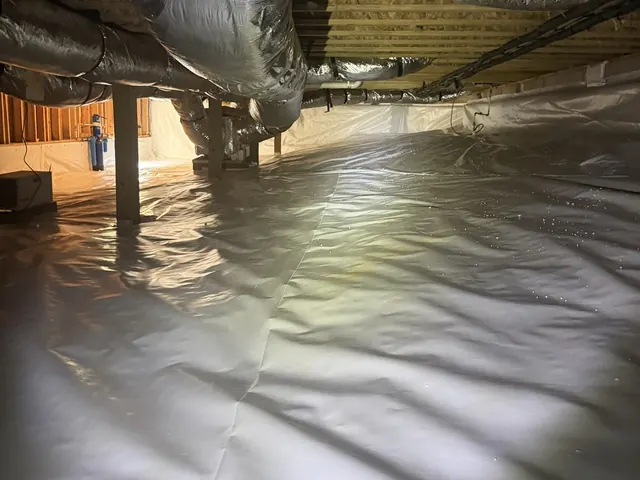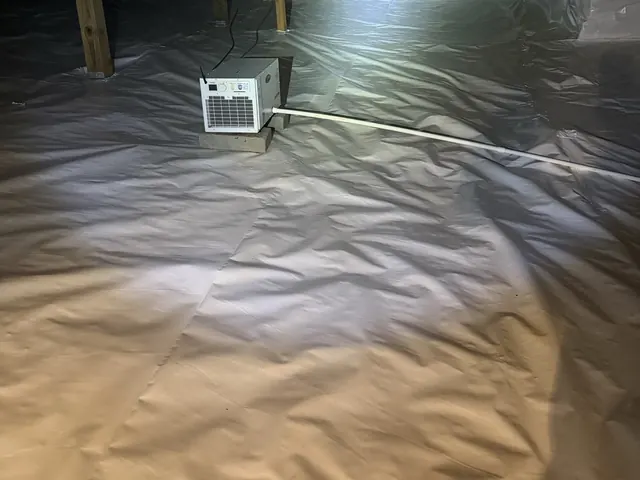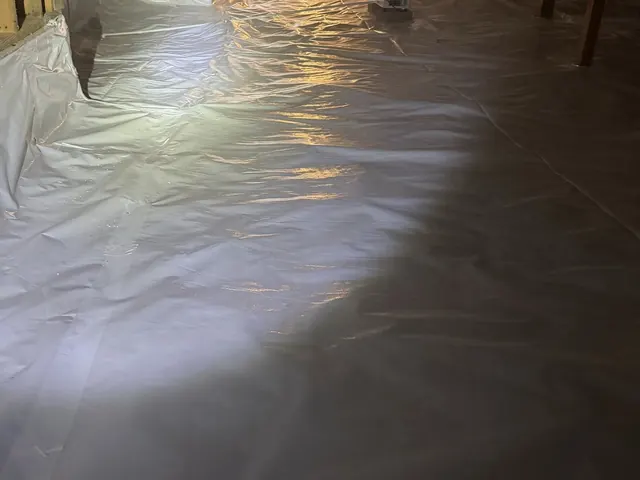
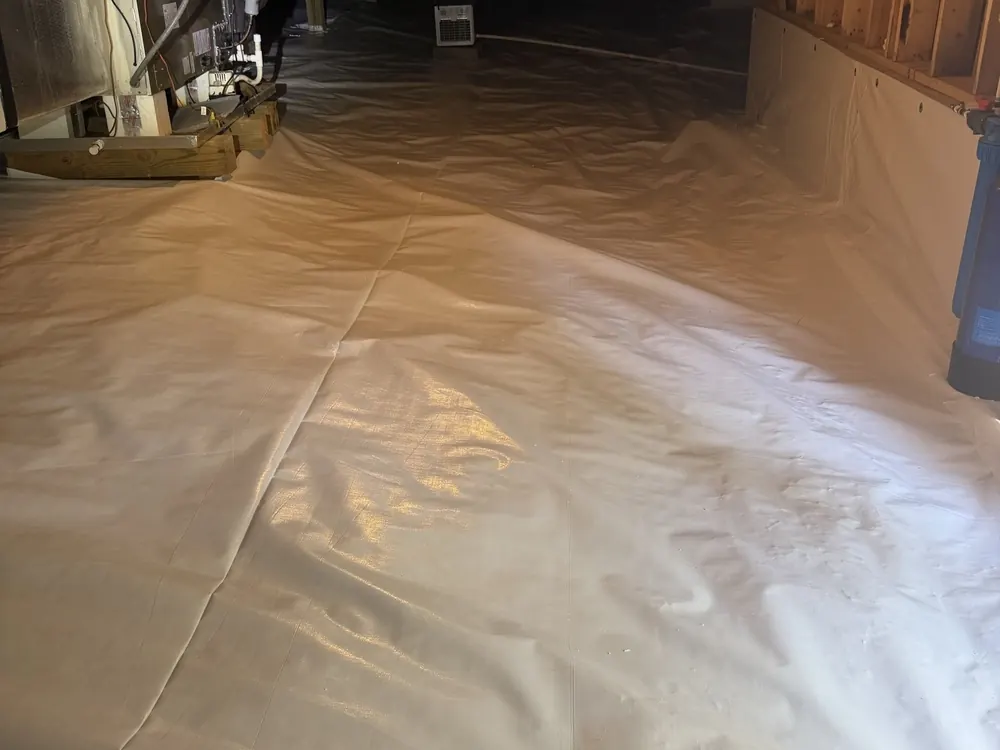
If your home has little louvered vents around the foundation, it is not a mistake. For most of the twentieth century, building codes required them. The theory sounded reasonable: let air flow through the crawl space and it will carry moisture away.
The theory just turned out to be wrong for climates like ours.
Why venting backfires in the Southeast
Venting works when the outside air is drier than the crawl space. In a Georgia summer, it almost never is. Our humid subtropical air regularly carries more moisture than the space it is supposed to be drying. So the vents pull muggy air in, that air meets surfaces cooled by the earth and the air conditioning above, and the moisture condenses, exactly like a glass of sweet tea sweating on a porch rail.
The result is the opposite of the intent: vented crawl spaces in the Southeast tend to be wetter in summer, not drier. Building science moved decisively toward sealed, conditioned crawl spaces in climates like ours. Modern codes now explicitly allow unvented crawl spaces built to spec.
What a sealed crawl space changes
- Humidity control. With ground moisture sealed under a heavy-duty barrier and outside air shut out, a right-sized dehumidifier can actually hold the space dry.
- Cleaner air upstairs. Air from the crawl space rises into the rooms above it. Sealing the space means that air is no longer damp, moldy or dusty.
- Warmer floors, calmer bills. Sealed and insulated crawl spaces stop the winter chill radiating through the floor, and your HVAC stops fighting crawl space humidity all summer.
- No more pest highway. Open vents and gaps are an invitation. A sealed space is a much less hospitable one.
Does every Georgia home need sealing?
No, and you should be suspicious of anyone who says otherwise before looking. Some crawl spaces stay reasonably dry thanks to lot grading, soil and luck. Some just need a fresh vapor barrier and sealed vents rather than the full treatment. And a space with standing water needs drainage solved before anything gets sealed, no exceptions.
The way to know which situation is yours is a proper look: moisture readings, a mold check, a drainage review, photos of all of it. That inspection is free with us, and the diagnosis is honest even when it is boring.
Wondering which side of the vented-vs-sealed line your home is on? Book a free inspection and get a straight answer with photos.