Is Standing Water in a Crawl Space Normal After Heavy Rain?
Standing water in a crawl space after heavy rain is common in northeast Georgia, and common is not the same thing as normal. That distinction decides what you should do about it.
Water can appear under any house after a hard storm. Water still sitting there days later has a route in and no route out. So does water that shows up in the same corner every time.
You can run the test yourself. Note where the crawl space water sits. Note how long it takes to disappear. Note whether it follows every storm or only the big ones.
Why Water Keeps Coming Back to the Same Crawl Space
Water gets into a crawl space by one of a few routes, and the route decides the fix. The usual sources:
- Roof water off a downspout that discharges at the wall
- Surface water off a yard that grades toward the house
- Groundwater rising through the soil after a long soak
- A plumbing leak that has nothing to do with weather
- A driveway or patio shedding toward the crawl space door
Northeast Georgia has its own wrinkle. Red clay soil sheds slowly and holds water against a foundation wall, so a yard that looks flat can still be draining toward the house.
October is the run-up to the wet part of the year here. A wet crawl space that flooded in a summer storm will do it again, and the damp never really left.
Finding the source is the whole job. Everything after that is choosing the right fix for the causes you found.
The Questions Homeowners Ask About Standing Water Under a House
Where Is the Water Actually Getting In?
Start outside, not underneath. Most of it comes from three places. Downspouts that discharge at the foundation. A grade that falls toward the house. A driveway or patio that sheds toward the crawl space door.
Surface water and groundwater behave differently, and you can tell them apart without a meter. Surface water arrives fast, within the storm, and usually enters near one wall.
Groundwater is slower. It shows up hours later, comes up through the soil across a wider area, and is worst after several wet days.
Good gutters and drainage settle the first kind. The second needs a different answer.
How Long Can Standing Water Sit Before It Does Damage?
Not long, and the damage starts with humidity rather than with the puddle. Water sitting in a closed space raises the moisture load on everything above it.
What shows up, roughly in this order:
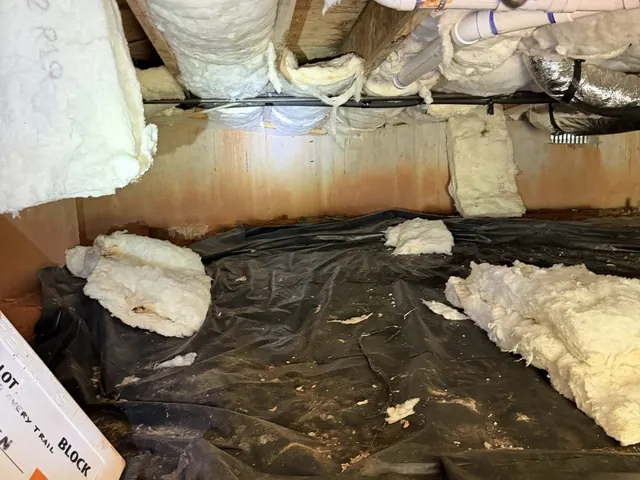
- Damp insulation sagging out of the joists
- Dark staining across the subfloor
- Visible mold growth on the framing
- Soft wood at the band joist
- A musty smell in the rooms above
Those are conditions you can see for yourself. Mold on a joist is a moisture reading more than anything else. High humidity under a floor is what carries rot and mold growth from one joist to the next, and none of it stops on its own.
Does a Sump Pump Fix Standing Water in a Crawl Space?
A sump pump removes water that has already arrived. It is the right answer when groundwater genuinely rises into the space. It is the wrong answer when a downspout is the cause.
A sump pump crawl space system is real equipment doing real work, and we install them where they belong. Water removal is not drainage.
Putting in a pump instead of fixing the outside is the most common way homeowners pay twice. The pump runs, the water keeps coming, and nothing about the house changed.
What Does Drainage and Grading Outside the House Have to Do With It?
Almost everything. Crawl space flooding in Georgia is usually a drainage under house problem that starts ten feet from the house.
The order outside is fixed. Extend the downspouts well away from the wall. Correct the grade so soil falls away from the foundation. Only then consider interior drainage.
Grading and landscaping are not our trade, and we will tell you when that is the whole answer. A dry crawl space often starts with a downspout extension and an afternoon with a shovel. That is a wet crawl space solved without a contract.
Is Encapsulation the Answer, or Does Water Have to Be Solved First?
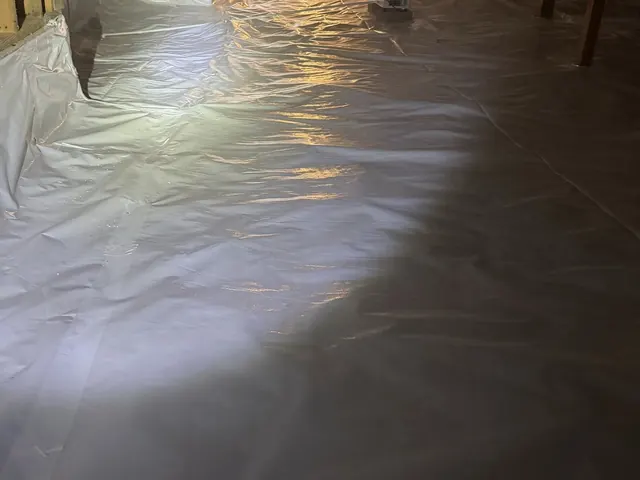
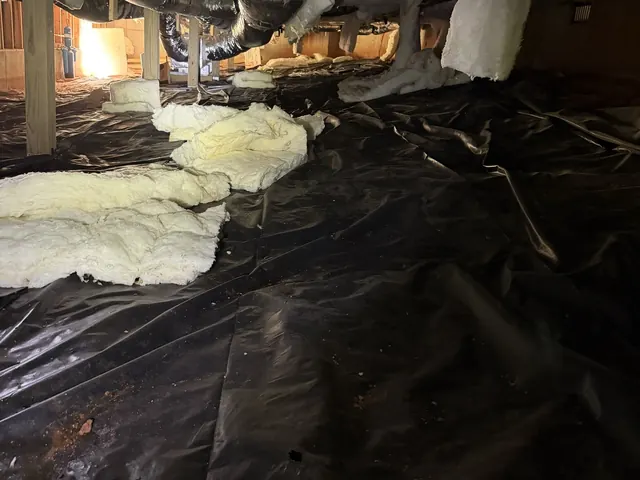
Water first, always. A liner installed over a space that still takes on water seals the water in and hides it from view.
The correct order runs one way. Stop the water. Dry the space. Then the vapor barrier goes down. Then a crawl space dehumidifier if the space still needs one.
Encapsulation works on crawl space moisture and on the air the house pulls up from below. It does not work on a leak, it will not hold back structural water, and it does not remove mold already on the joists.
Not sure which kind of water you have? Book a free inspection and someone will come look.
Getting a Straight Answer About the Water Under Your House
Some of these calls end with a downspout extension and no contract, and we will tell you when that is the case. Nobody needs a liner sold to them for a problem a shovel fixes.
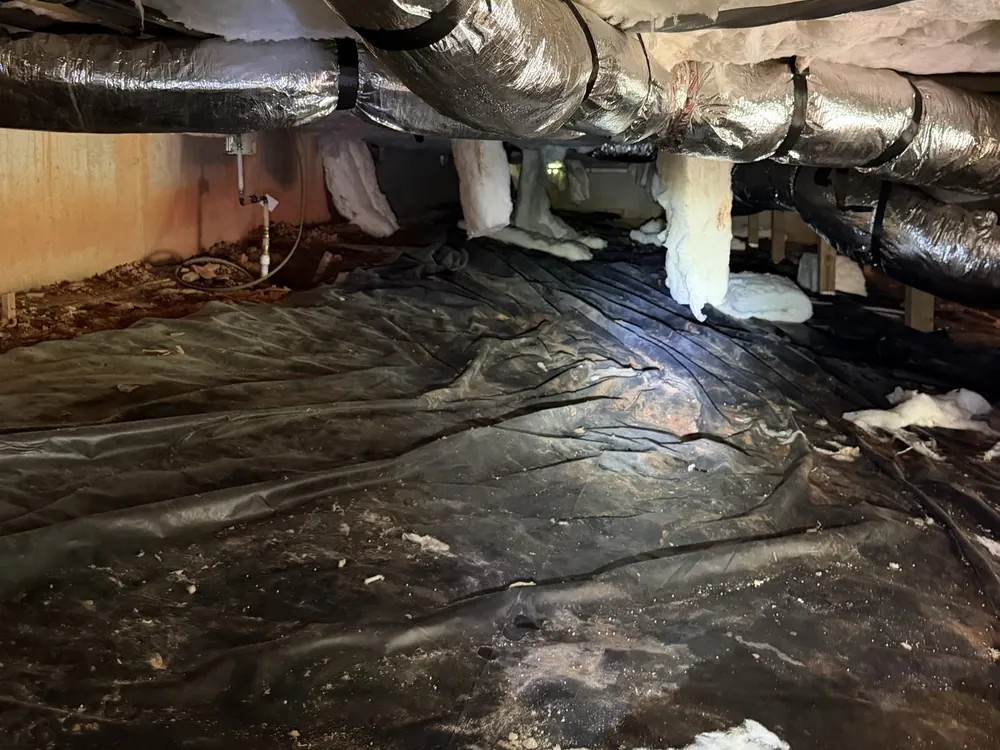
Four conditions are worth a look now rather than after the next storm. Water still present days later. Water in the same spot every time. Soft wood anywhere, which is a structural question for the appropriate trade. A liner already down with water sitting on top of it.
The free crawl space inspection is how you find out. Someone goes under the house, looks, and reports what is actually there. Book a free inspection. We serve Athens, Madison, Monroe, Watkinsville and the surrounding area.
FAQs About Water in a Crawl Space
Q: What should I do the day the crawl space floods?
A: Photograph it before anything moves, then walk outside during the rain. Where the water arrives tells you more than where it pools.
Q: Can I pump it out myself?
A: Yes, and it is worth doing so the space can dry. Water removal without finding the source just resets the clock until the next heavy rain.
Q: Will a vapor barrier keep water out?
A: No. A vapor barrier manages ground moisture and humidity, not liquid water, and damp soil under a good liner is still damp soil.
Get a Free Crawl Space Inspection After the Next Storm
The best time to look at standing water is while it is still there. Book the free crawl space inspection. We will tell you what the water under your home is doing, and whether it needs fixing at all.