Mold in crawl space signs almost never show up in the crawl space first, they show up upstairs. Almost nobody finds it by crawling under the house on a hunch. They find it because a room smells wrong, a floorboard feels soft, or the AC stopped keeping up in July. This is a field guide for both ends: what to notice on the first floor, and what you are looking at once you get under there with a flashlight.
The Mold in Crawl Space Signs You Can Spot Without Going Under the House
Start where you already are. Most of the early evidence lives on the first floor.
What to look and listen for:
- A musty or earthy odor near floor registers, in ground-floor closets, and along baseboards
- Indoor humidity your air conditioner cannot pull down no matter how long it runs
- Condensation on window glass in summer, which is backwards from what people expect
- Hardwood that is cupping, or spots in the floor that feel soft or spongy
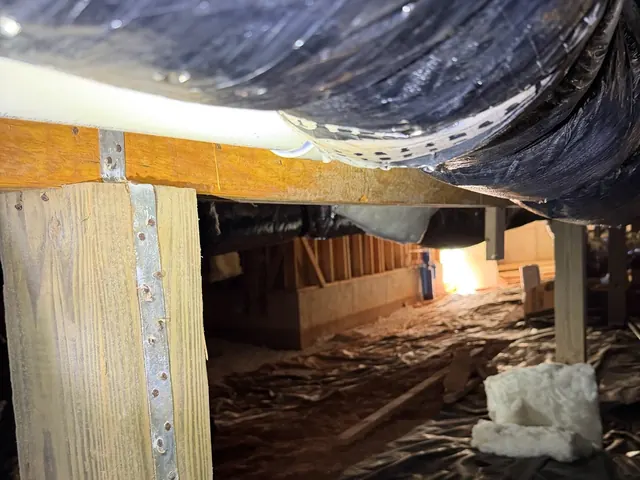
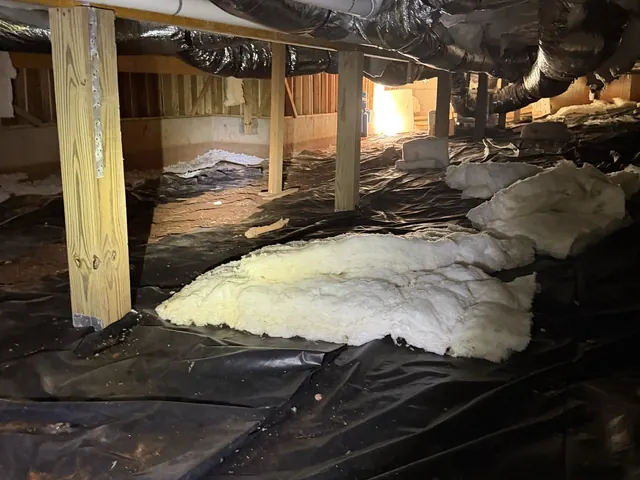
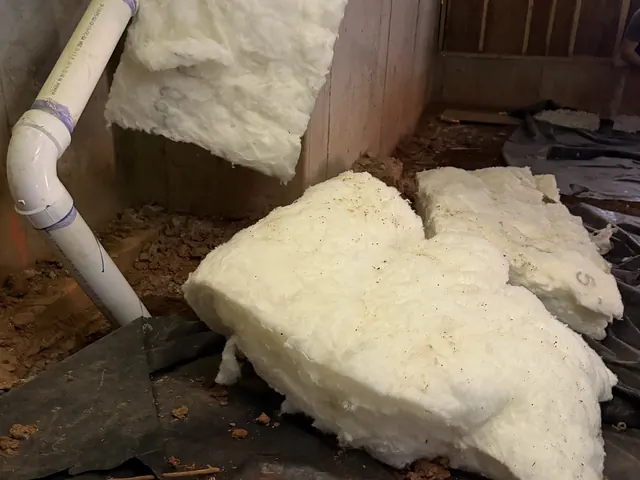
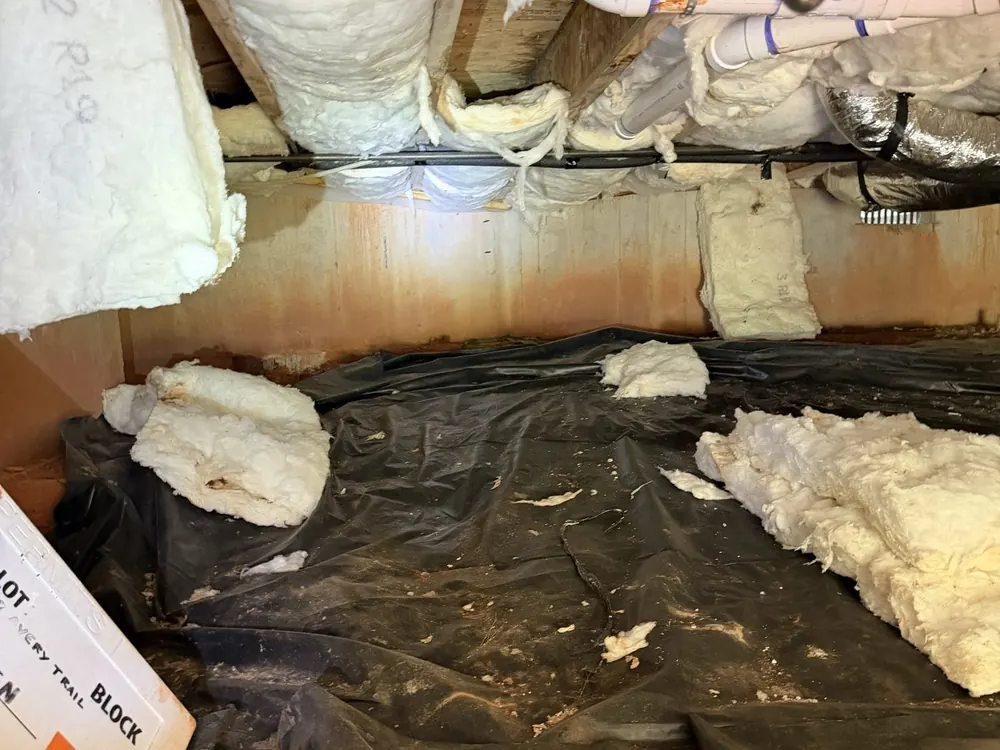
- Insulation visibly sagging or lying on the ground when you glance through a foundation vent
The connection is simple. Air from the crawl space rises into the rooms above it, so what is down there does not stay down there. Nothing separates the two but a subfloor full of gaps around pipes and wires.
Be honest about what these signs prove. Every one of them means moisture. None confirms mold. Confirming means putting eyes on the joists.
What It Looks Like Down There, and What Gets Mistaken for Mold
Color and texture tell you more than a test kit will. Here is what actually turns up in Georgia crawl spaces.
White fuzzy or cottony growth on floor joists, girders, and the underside of the subfloor is a common finding in this region. It shows up in patches that cluster near foundation vents and around plumbing, where surfaces run coolest.
Dark spotting or black staining on joists and subfloor marks where a plumbing leak or ongoing condensation kept the wood wet. It follows the water, so the pattern often points you at the source.
Yellow or gray-brown growth with a stringy, root-like, or mushroom-like look is a wood-decay concern, not a surface issue. Get that one in front of a professional quickly, because something is eating the structure rather than living on it.
Now the two things constantly mistaken for mold:
White chalky crystals on block foundation walls are efflorescence, mineral salt left behind when water moves through masonry and evaporates. It brushes off dry and powdery. It is not growth, but it is a moisture flag worth taking seriously.
Old dark water staining on dry wood, plus surface dust and cobwebs. Age-darkened lumber gets called mold constantly, and plenty of panicked phone calls turn out to be a water stain that has been dry for decades.
The measurement that beats all of the above: wood moisture content. Dry framing lumber tops out at 19%, and above 20% wood is no longer protected from mold and rot, whatever the surface looks like.
How to Look Safely if You Go Under Yourself
If you are going under, go prepared: flashlight, respirator, long sleeves, gloves, and knee pads. Never disturb growth you are trying to identify.
Do not enter a crawl space with standing water near wiring. That is a hard stop.
Photograph what you find instead of scraping at it. Scraping releases spores into the air you are lying in.
Not sure what you are looking at? Book a free inspection and we will come look. The crawl space inspection is free, with no pressure.
Why Northeast Georgia Crawl Spaces Grow Mold So Reliably
Growth needs three things, and a Georgia crawl space supplies all three without trying. Organic material, meaning your joists and subfloor. Spores, which are always present. And moisture, the only one you can control.
The moisture arrives two ways. It rises out of an exposed dirt floor, evaporating upward day and night. And it comes in as humid outside air through open foundation vents, then condenses the moment it touches a cool surface.
Relative humidity above 60 percent is the line where growth becomes possible. A vented crawl space breathes the outside air, so in a Georgia summer it can spend long stretches above that line.
EPA guidance is to dry wet materials within 24 to 48 hours to keep mold from starting. That makes this a maintenance-cycle problem, not a one-time accident. Clean it up and leave the conditions alone, and you are simply on a schedule.
What Real Remediation Looks Like, and What to Skip
Killing the growth without fixing the moisture guarantees it comes back. We do not treat symptoms, we eliminate the cause, and if a company is not talking to you about water, they are selling you a temporary result.
The real sequence:
- Identify and stop the water source: grading, drainage, a leak, or condensation
- Remove contaminated insulation and debris
- Treat and clean the affected wood
- Seal the crawl space so outside air and ground moisture stop feeding it
- Control humidity with a properly sized dehumidifier
Be skeptical of anything that skips step one. Bleach on porous wood is mostly water, and the water stays behind after the color changes. Fogging and ozone as standalone services do nothing about the source. Any quote that treats growth without addressing the water is a quote to do this again in two years.
On DIY test kits: they will grow something from nearly any air sample in any house, which is why they almost never change the plan.
Scope, honestly: crawl space mold work in Georgia is normally bundled with moisture control, and the cost depends on the size of the space and what is feeding the growth. The free inspection is where you get a real number. Every install carries our 5-year warranty: we cover the unit and the install. Plenty of houses need cleanup and drainage only, and we say so. Family-owned since 2024, no franchise.
Frequently Asked Questions
Q: Is white mold in a crawl space dangerous?
A: Treat any fungal growth on structural wood seriously, regardless of color. Color does not reliably tell you what something is, and we do not identify species or make health claims. If you have health concerns, talk to your doctor. What matters structurally is that growth means the wood is staying wet.
Q: Can mold under the house affect the air upstairs?
A: Yes. Air moves from the crawl space up into your first floor through the stack effect, carrying odors and particulates with it. That is why a crawl space problem so often gets noticed as an upstairs problem first.
Q: How much does crawl space mold remediation cost in Georgia?
A: It depends almost entirely on the moisture work behind it. Cleanup alone on a small, dry space is a modest job. A space with active water, contaminated insulation, and no barrier is a full moisture-control project. You get a written scope after a free inspection.
Q: Will bleach kill mold on floor joists?
A: Not usefully. Bleach is mostly water, and on porous wood the color lightens while the moisture soaks in and stays. It looks like it worked for a few weeks. Proper cleaning plus a dry, sealed crawl space is what holds.
Q: Do I need a mold test before remediation?
A: Rarely. A test tells you something is present, which you already suspect, and says nothing about where the water is coming from. Moisture readings, a visual inspection of the joists, and finding the water source shape the actual plan.
Get Eyes on It Before It Spreads
The signs upstairs will tell you something is wrong under the house, but only an inspection tells you what and how far. Crawl Space Doctors gives you a free crawl space inspection and an honest report, including the answer that nothing needs doing. No fee, no pressure. Book a free inspection. We serve Athens, Madison, Monroe, Watkinsville, Gainesville, Augusta, Elberton, and Hartwell.