How Long Does Crawl Space Encapsulation Actually Take?
How long encapsulation takes is a question with a short answer and a long asterisk. The work itself is measured in days, and the schedule is set by what the inspection finds.
The real question underneath it is simpler. How many days is my house a work site, and when is it finished.
Most crawl spaces are a small number of working days once the crew starts. What moves the date is everything that has to happen before the vapor barrier goes down.
So the honest answer depends on the space. A clean dry crawl space with good access is a short crawl space encapsulation project. One full of fallen insulation and standing water is not.
Why the Timeline Varies From One Crawl Space to the Next
Four things set the schedule. The size of the space. The height and the access. What has to be removed first. Whether water has to be solved before anything is sealed.
A tight eighteen inch crawl space takes longer to work than one you can kneel in, and access decides how fast material moves in and out.
Georgia adds one more. A crawl space that has been open and vented through a northeast Georgia summer arrives at October carrying moisture, and drying is not instant. Humidity that took four months to build does not leave in an afternoon.
Any company that quotes a fixed duration before looking is quoting a hope. Crawl spaces typically differ more than the houses above them do.
Some of the work that moves the date is not ours to do. Plumbing repairs go to a plumber. Structural damage goes to the appropriate trade. Pests and pest treatment go to a licensed operator. Each of those has to be handled within its own schedule before anything gets sealed.
What You Will Need Sorted Before Crews Arrive
Four things are worth sorting before the crew arrives:
- Clear access to the crawl space door
- Anything stored under the house moved out
- Any plumbing leak already repaired
- A written scope you have actually read
Clearing debris yourself is optional. Reading the scope is not, and it is where your questions belong before any material is installed.
The Encapsulation Timeline, Step by Step
- Free inspection and written scope. Somebody goes under the house, records what is there, and puts the findings and the plan in writing. This is the step that turns a guess into a date. It is also where conditions outside our scope get identified. A plumbing leak, structural damage, or a pest problem has to be handled by the right trade before anything is sealed. Bring your questions here, because this is when they are cheapest to answer. Nothing about the encapsulation process is complete until that document exists.
- Clear out and clean up. Old fallen insulation, debris, and any failed material comes out first. In a crawl space that has never been touched, this is often the longest single part of the job. It is also the part homeowners underestimate. Decades of batts, plastic scraps, and whatever the last owner left behind come out by hand through one small door. Visible mold on the framing is addressed here as a remediation step, and the work does not move on until the wood is clean.
- Solve the water before sealing anything. Grading, drainage, and a sump if the space needs one all happen before the liner goes down. Sealing a wet crawl space just seals the water in. That is the single most expensive mistake in this trade, and it is invisible until it is not. If drying time is needed, this is where the calendar stretches. There is no honest way to compress it, and a system installed over moisture will not work properly. The space has to be dry before it can be sealed.
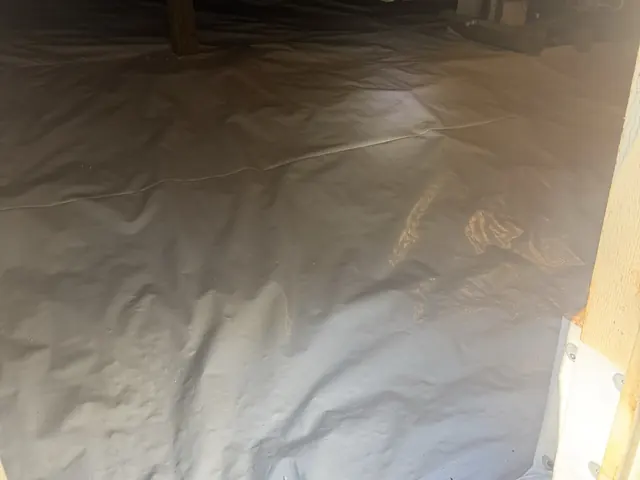
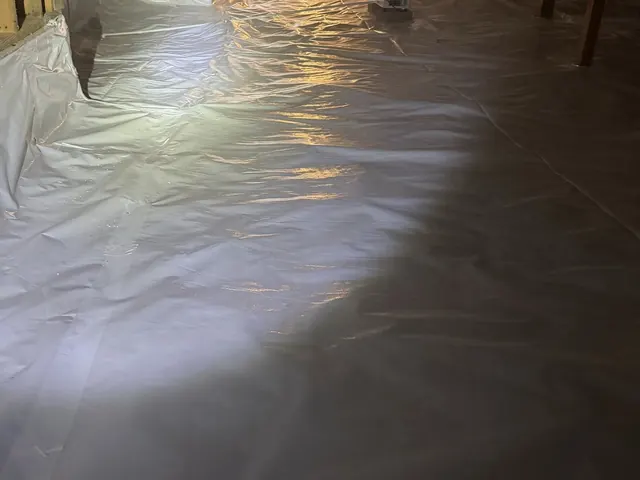
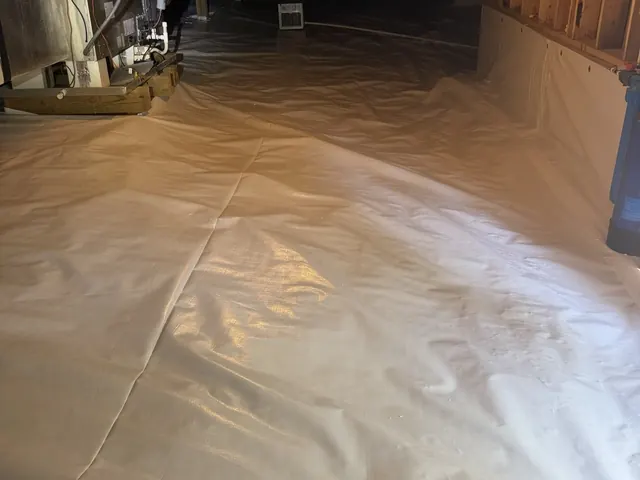
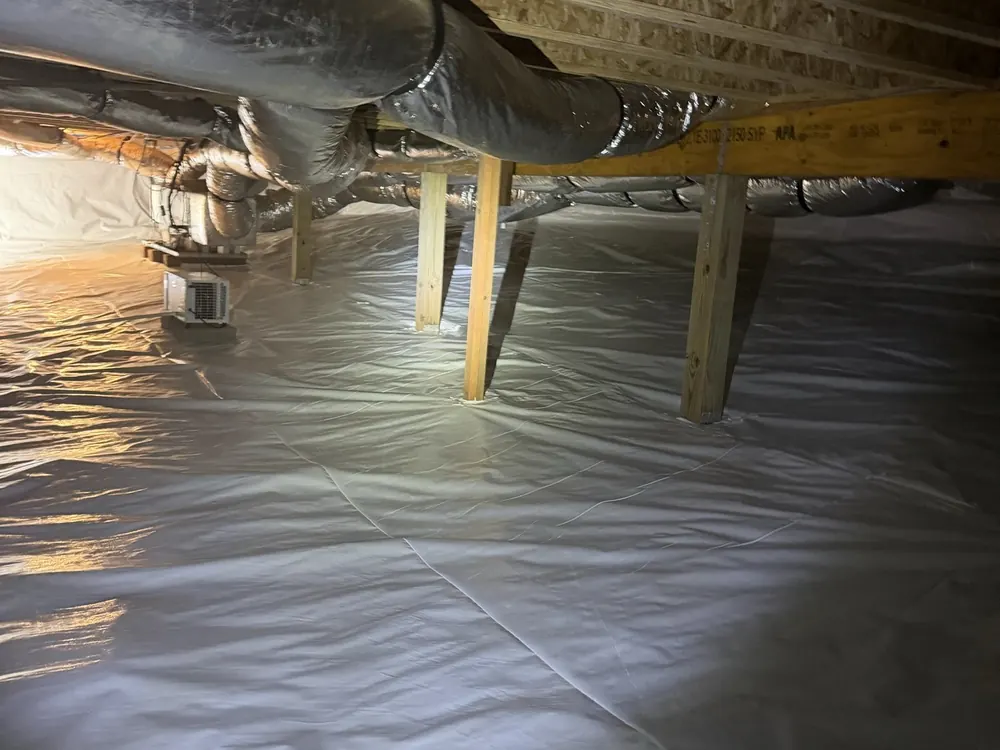
- Install the liner and seal the space. The vapor barrier goes down across the ground and up the foundation walls. Seams are sealed, penetrations are detailed, and the vents are closed. This is the encapsulation installation itself. It is usually faster than the two steps before it, because encapsulating a prepared space is careful work rather than heavy work. It is the step people picture when they picture the job, and it is rarely the long one. By the end of it you have an encapsulated crawl space.
- Insulation, dehumidifier, and the walk through. Insulation goes on the walls rather than between the joists. The dehumidifier is set and drained, and the crew walks the finished space with you. After that the space takes time to settle into its new environment. Sealed air under a floor does not change overnight. That is normal rather than a problem. The best result is a quality install you never think about again. A properly finished encapsulation process ends quietly, with a dry space and less energy lost through the floor.
Want a date rather than a range? Book a free inspection and someone will come look.
Getting a Realistic Date From Your Contractor
We are owner operated. No franchise and no call center, so the schedule comes from the person who actually looked at your crawl space.
A date you were given over the phone by someone who has never seen your house is a marketing number. Nobody on the crew earns more by adding scope. That matters more for a timeline than most homeowners realize, because padded scope is padded days.
Ask any contractor four questions before you sign. What is included. What is excluded. What would move the date. Whether the cost and the timeline sit in the same written document.
The free crawl space inspection is where all four get answered for your home. Someone goes under the house, looks, and reports what is there. Book a free inspection. We serve Athens, Madison, Monroe, Watkinsville and the surrounding area.
The best contractors will tell you when the work will not be complete in the time you hoped.
FAQs About Crawl Space Encapsulation Timelines
Q: Can it be finished in a single day?
A: Only a small, clean, dry crawl space with easy access. Most jobs run longer because the clear out and the water work come first, and neither compresses well.
Q: Does adding a dehumidifier add time?
A: Very little. The dehumidifier is one of the last things installed, and it goes in after the sealed space is finished. Setting and draining it is a short piece of work.
Q: Does the time of year matter in Georgia?
A: Yes, mostly through drying time. A space that has carried summer humidity for months needs longer to dry than one booked in a cold dry stretch.
Q: How soon will I notice a difference?
A: Typically within weeks rather than the same day. Moisture readings fall first, the floor follows, and the air quality in the sealed space settles once the dehumidifier has run a while.
Q: How long does the finished work hold up?
A: It depends on the scope and the materials. A liner detailed properly at the walls and penetrations, in a space where the water was solved first, is a long-term result.
Book a Free Crawl Space Inspection to Get Your Own Timeline
A real timeline comes out of a real look at the space. Book the free crawl space inspection and you get a written scope with the schedule in it, for your home and not for an average one.
The inspection costs nothing, and it is the only way to replace a range with a date. Book a free inspection. October is a good time to get crawl space encapsulation on the calendar, before the wet part of winter arrives.